CBC Rigging Guide / From package to water
RIG IT RIGHT.
FISH IT YOUR WAY.
Choose your bait. Pick a presentation. Get the setup steps and know when to use it.
1 / Choose your CBC bait
2 / Choose your presentation
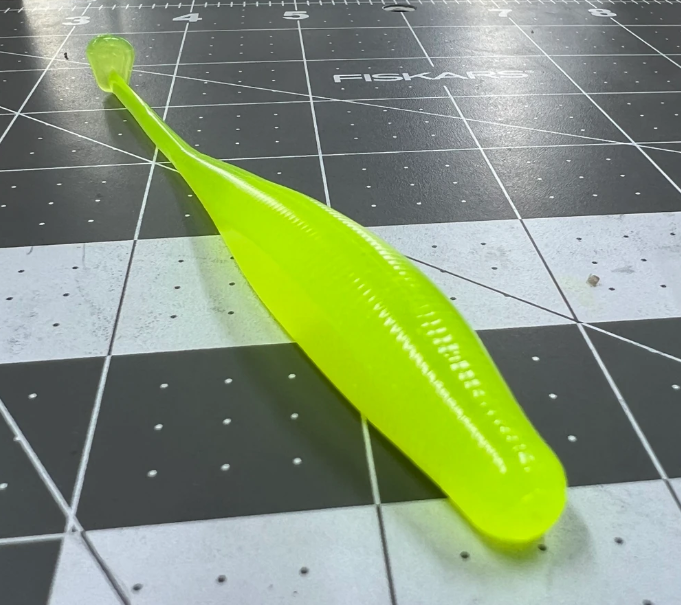
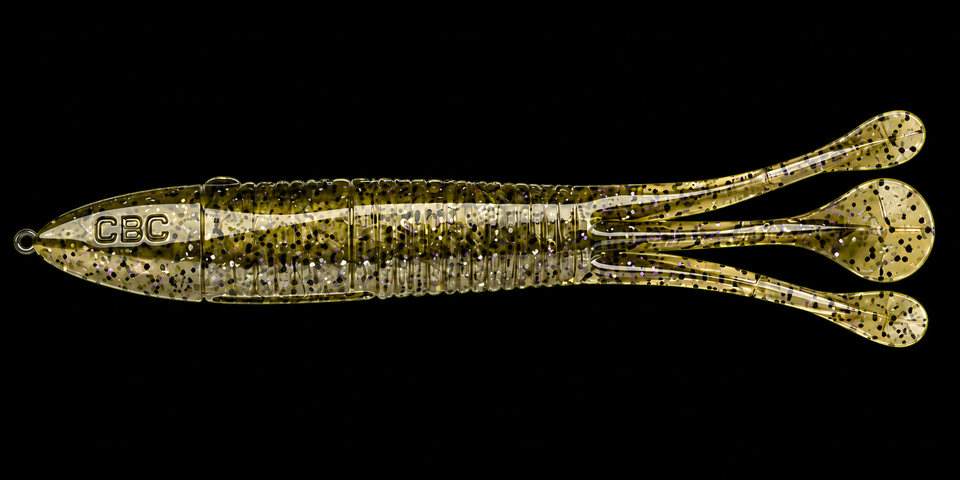
Flukeawitz
4-inch finesse paddle-tail. Three ways to match your presentation to the water.
JigheadOpen Water & Structure
What you need
Jighead with a hook that fits the body. Choose enough weight to reach your target depth.
Picture guide
Tap a picture to enlarge it. Hook and weight sizes are illustrative; choose hardware that fits your bait.
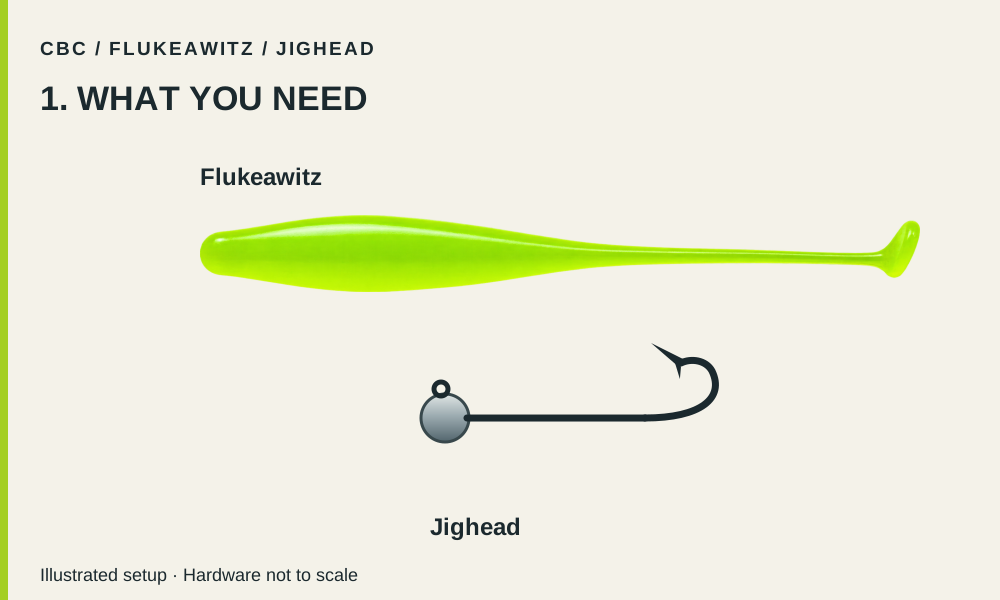 1. What you needEnlarge ↗
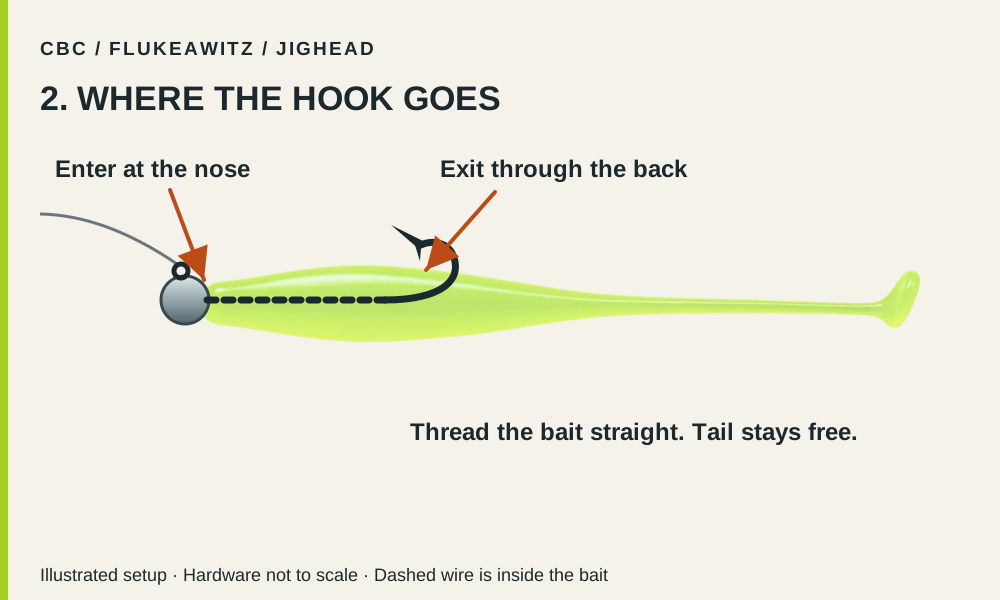 2. Where the hook goesEnlarge ↗
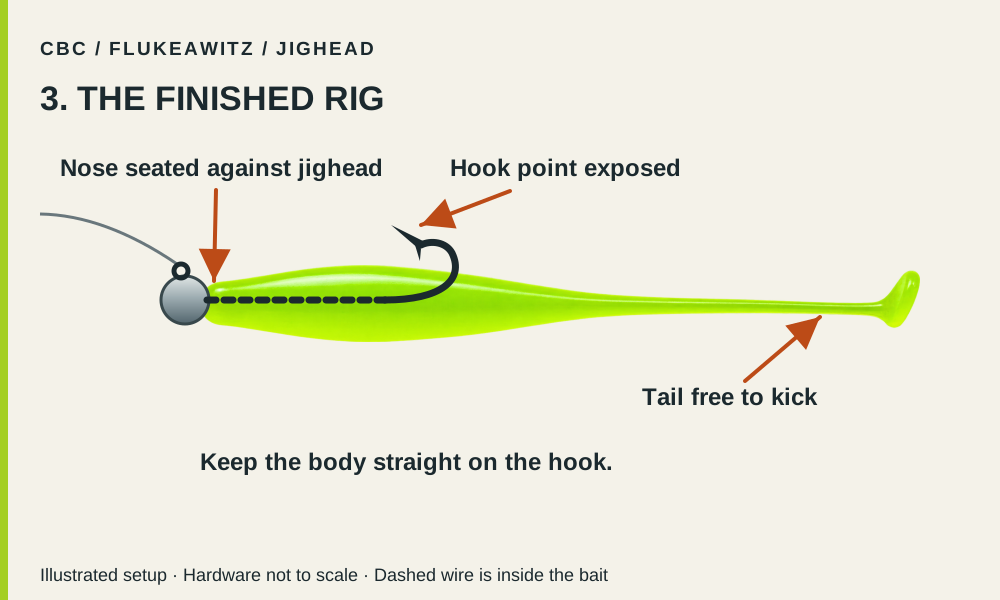 3. The finished rigEnlarge ↗
Set it up
- Step 1: Line the jighead alongside the bait to locate the hook exit point.
- Step 2: Enter the center of the nose and thread the body onto the hook. Bring the point out through the back at the marked position.
- Step 3: Seat the nose against the jighead and check that the body hangs straight with the paddle tail free.
Fish it
Swim it steadily, count it down through the water column, or work it along the bottom.
Weighted Texas RigGrass & Heavy Cover
What you need
Bullet weight and an offset hook sized to fit the bait.
Picture guide
Tap a picture to enlarge it. Hook and weight sizes are illustrative; choose hardware that fits your bait.
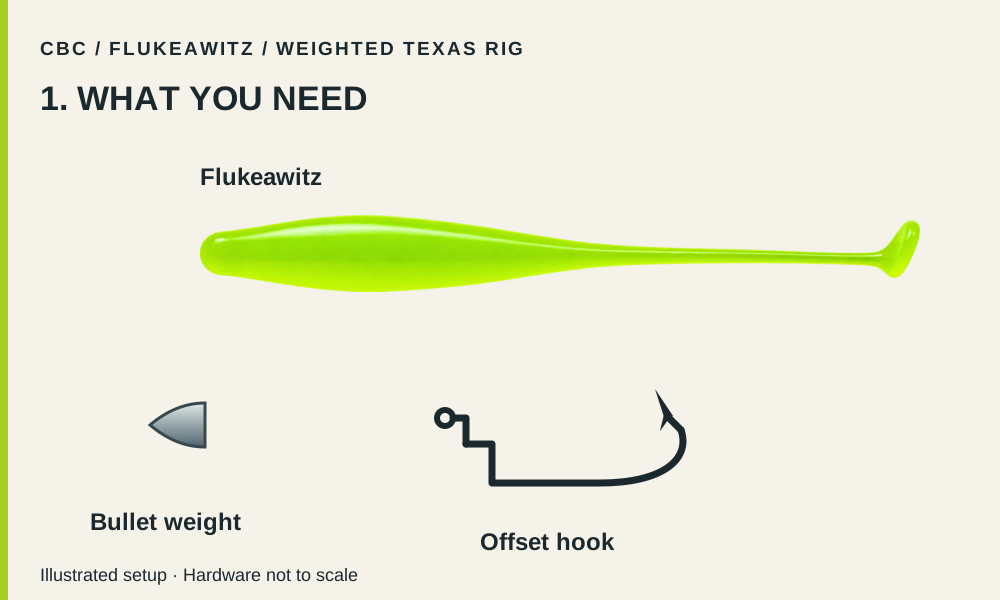 1. What you needEnlarge ↗
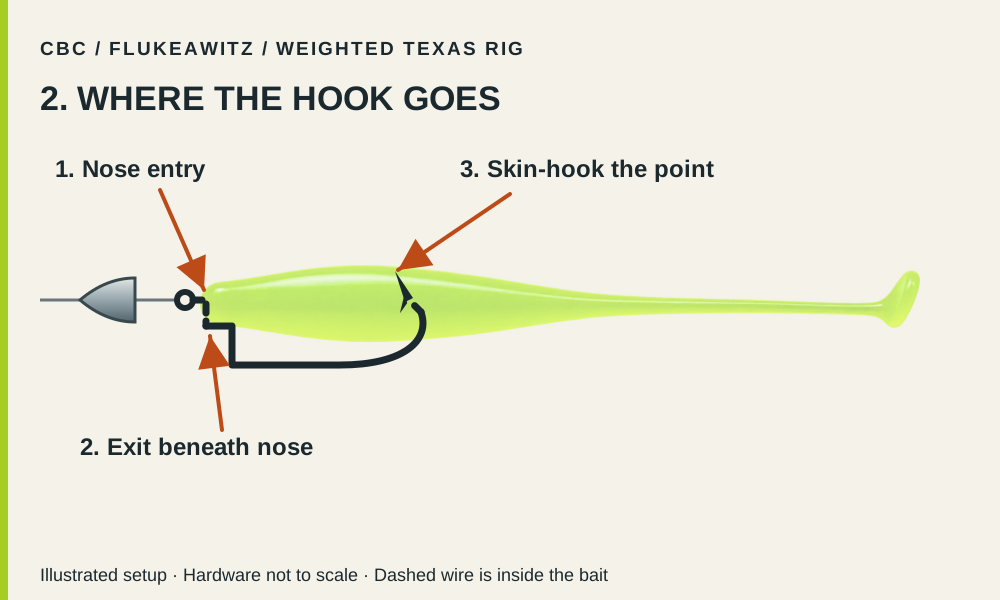 2. Where the hook goesEnlarge ↗
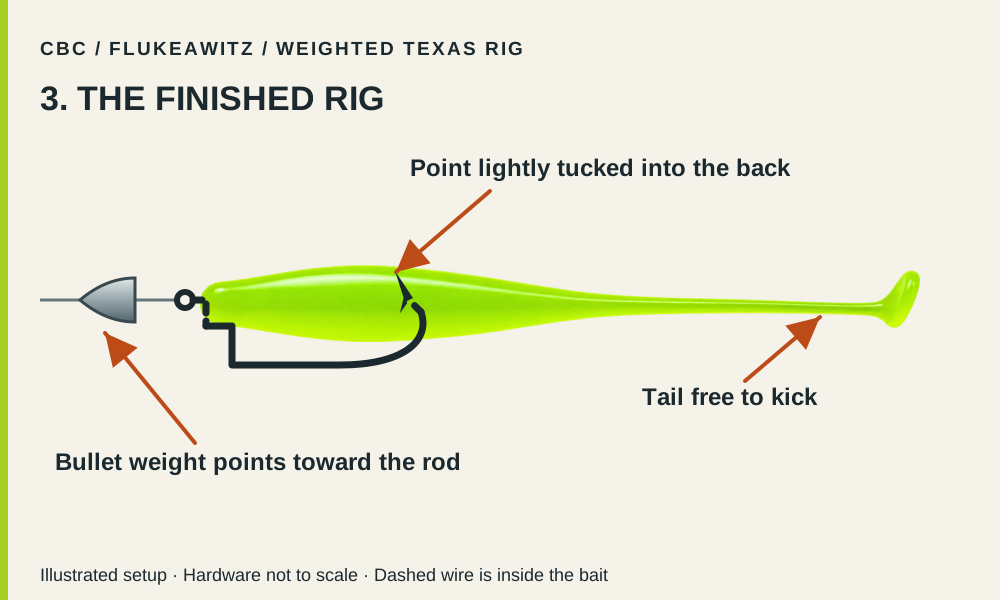 3. The finished rigEnlarge ↗
Set it up
- Step 1: Slide a bullet weight onto the line, pointed end toward the rod, then tie on the offset hook.
- Step 2: Enter the nose, bring the point out beneath it, and slide the nose onto the hook offset.
- Step 3: Rotate the hook, line it up with the body, and pass the point through the body. Lightly skin-hook the point for a weedless presentation; keep the bait straight.
Fish it
Work through vegetation and submerged cover. Use controlled movements and pauses, letting the weight bring the bait back to the target depth.
Weighted Swimbait HookShallow Water & Slow Retrieves
What you need
Belly-weighted swimbait hook sized to fit the bait.
Picture guide
Tap a picture to enlarge it. Hook and weight sizes are illustrative; choose hardware that fits your bait.
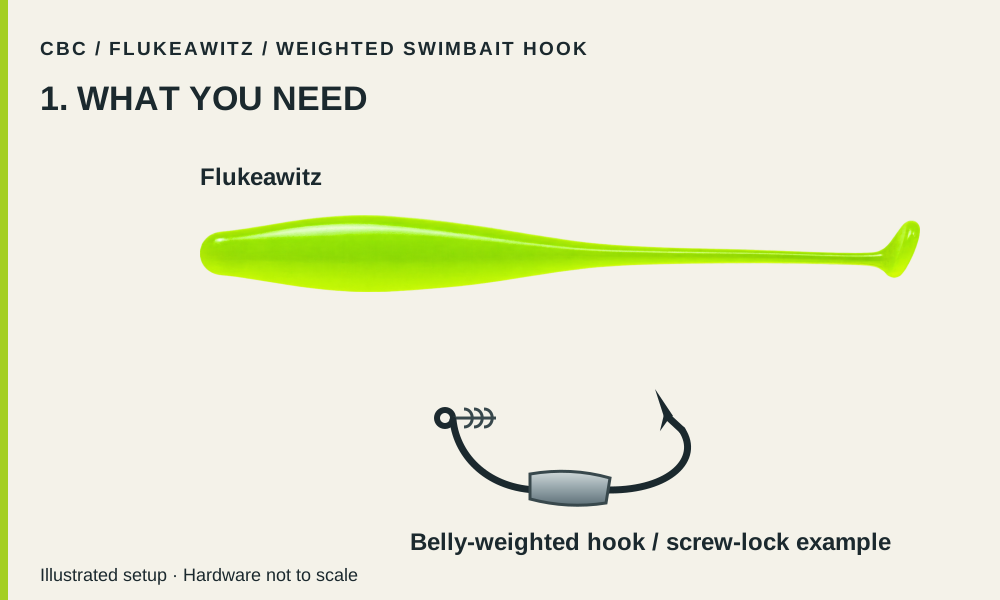 1. What you needEnlarge ↗
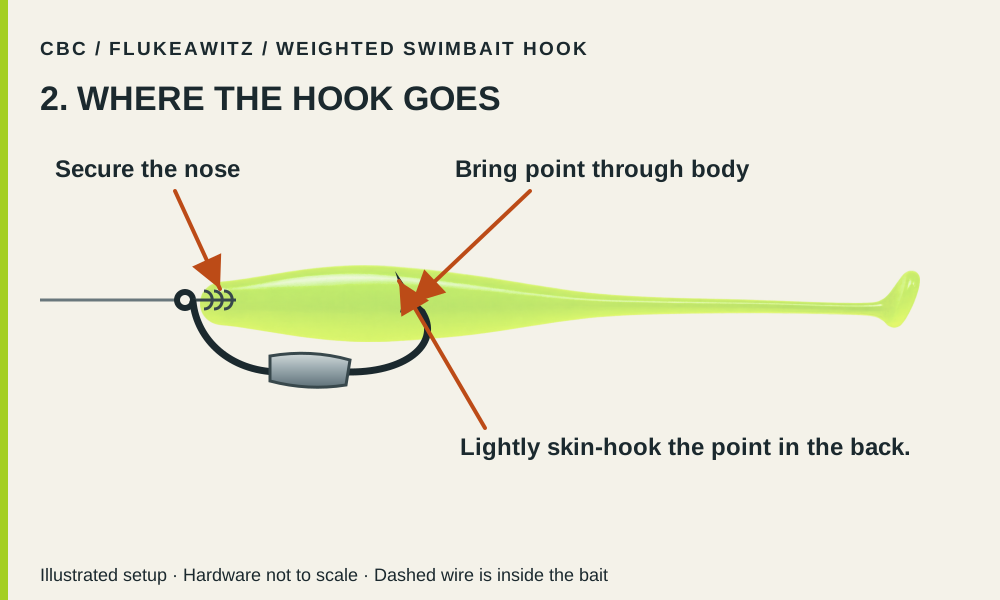 2. Where the hook goesEnlarge ↗
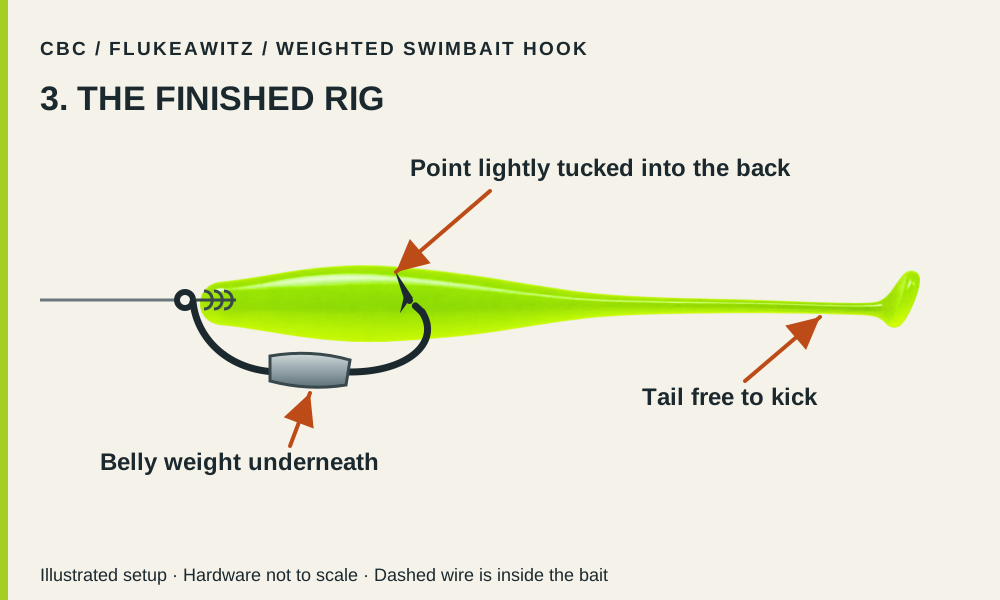 3. The finished rigEnlarge ↗
Set it up
- Step 1: Secure the nose using the hook’s screw-lock or offset keeper, following its attachment design.
- Step 2: Measure where the hook point should pass through the body, then bring it through so the bait sits straight.
- Step 3: Lightly skin-hook the point for a weedless presentation. Keep the belly weight underneath and the narrow tail section free.
Fish it
Use a slow, steady swimming retrieve in shallow water. Keep the body straight so the compact paddle can kick naturally.
2 / Choose your presentation
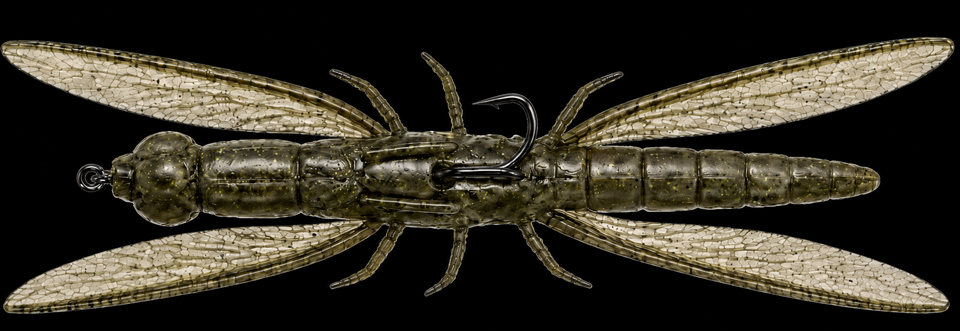
Pad Bug
Current design reference. Final hook fit and guard behavior remain subject to physical production testing.
Weightless Texas rigLily pads, grass mats & shallow wood
What you need
Design reference: VMC 7317 size 3/0 EWG hook. No added weight.
Set it up
- Step 1: Enter through the reinforced nose and seat the bait straight on the hook.
- Step 2: Seat the hook wire in the belly relief.
- Step 3: Center the hook point between the two soft dorsal guards. Keep the eye, gap, and barb clear.
Fish it
Pull across the cover and pause at holes, lanes, and edges. Let the bait fall into an opening, then use short hops or a slow crawl.
Lightly weighted Texas rigWhen you need a little more depth
What you need
The same Texas-rig hook reference, with only enough added weight to reach the target depth.
Set it up
- Step 1: Use the same nose entry, belly relief, and centered point position as the weightless rig.
- Step 2: Add only enough weight to reach the target depth.
- Step 3: Check that the two guards can move freely and the hook gap remains open.
Fish it
Work openings and edges slowly. Pause to let the bait settle before moving to the next target.
On the CBC bench
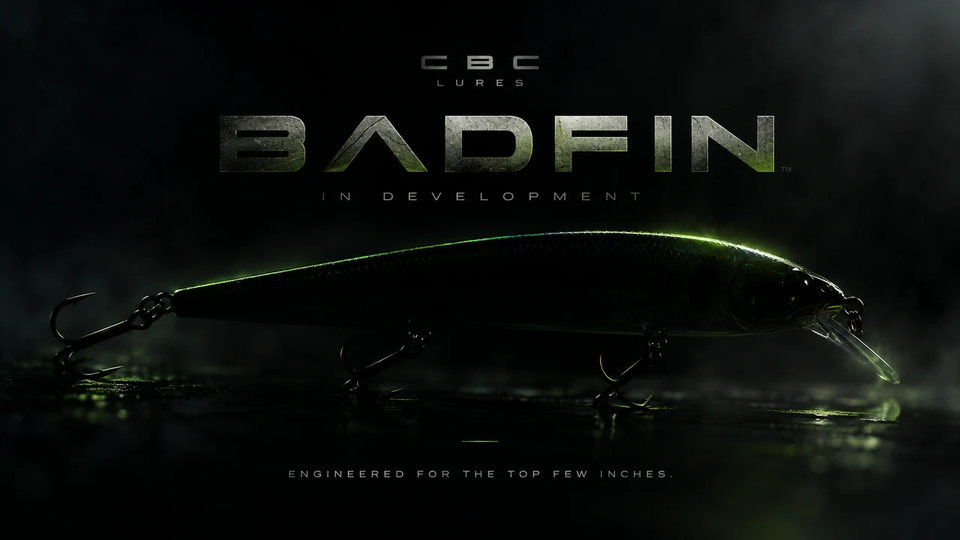
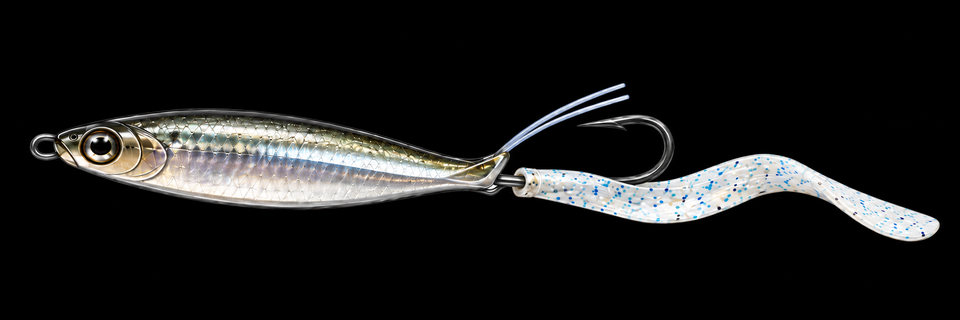
Badfin
In development. Final hook configuration and rigging instructions have not been confirmed.
RIGGING GUIDE IN DEVELOPMENT.
We’ll add the setup steps here when the hardware and rigging are confirmed. Follow the current design and prototype updates on the product page.
View development details →2 / Choose your presentation
Airstrike
Design reference for the open-point topwater concept. Production hardware and fit remain subject to testing.
Open-point topwater presentationPad openings, grass edges & calm shallow water
What you need
Design reference: centered VMC 7317 size 2/0 open-point hook and nose line tie.
Set it up
- Step 1: Use the nose line tie as the attachment point shown in the current design.
- Step 2: Keep the upward hook point exposed and the gap clear.
- Step 3: Check that the wings and legs can move freely before casting.
Fish it
Cast beyond the target, let the lure settle, and wait for the landing rings to disappear. Give one or two short, controlled twitches, then pause again.
On the CBC bench
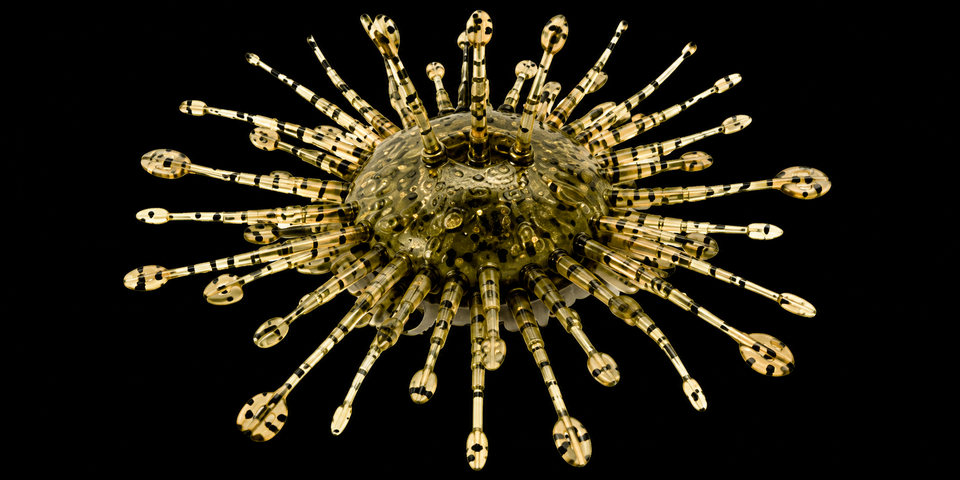
Spoondini
Prototype development. Hook shielding, trailer behavior, and hardware are still being tested; the final rigging guide is coming later.
RIGGING GUIDE IN DEVELOPMENT.
We’ll add the setup steps here when the hardware and rigging are confirmed. Follow the current design and prototype updates on the product page.
View development details →2 / Choose your presentation
Outbreak
Pre-production design reference. Hook fit and final production details remain subject to testing.
Unweighted open wacky rigPressured bass, cover edges & long pauses
What you need
Design reference: VMC 7344WK size 2/0 open hook. No added weight for the slowest fall.
Set it up
- Step 1: Locate the two hook dimples on top of the reinforced wacky core.
- Step 2: Enter through one dimple and exit through the other.
- Step 3: Keep the hook point and gap completely open, with the appendages free to move.
Fish it
Let it fall slowly beside cover. Use long pauses or deadstick the bait so its appendages can keep moving with minimal input.
2 / Choose your presentation
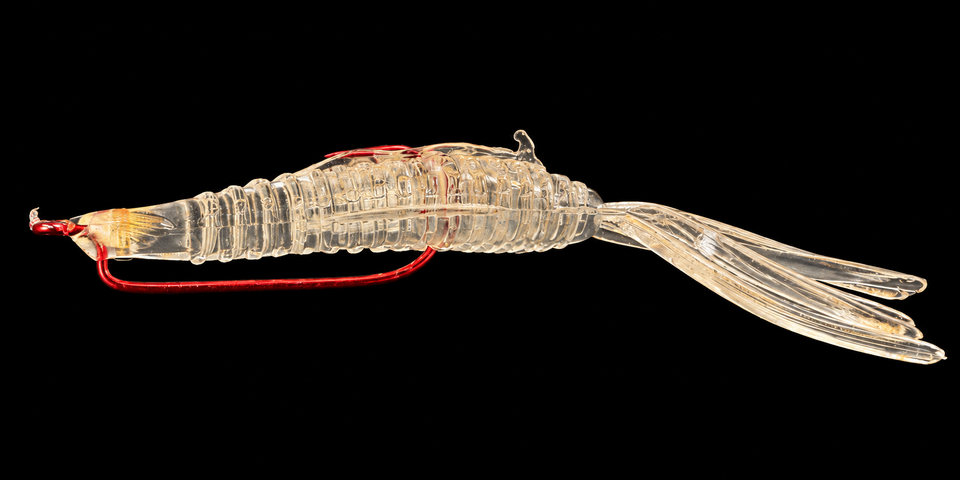
Chernobyl Minnow
Pre-production design reference. Final production hook fit remains subject to testing.
Weightless Texas rigPads, shallow grass & cover edges
What you need
Design reference: VMC 7316 size 3/0 hook. No added weight.
Set it up
- Step 1: Texas-rig the bait through the nose and keep the body straight.
- Step 2: Lightly skin-hook the point in the dorsal pocket.
- Step 3: Leave all three paddle tails free; the design does not require a wire or fiber weed guard.
Fish it
Swim it unweighted over pads and shallow grass, varying the retrieve and adding pauses around cover.
Lightly weighted Texas rigWhen depth or wind calls for added weight
What you need
The same Texas-rig hook reference with light added weight.
Set it up
- Step 1: Use the same straight Texas rig and skin-hooked dorsal point position.
- Step 2: Add light weight only when depth or wind demands it.
- Step 3: Recheck that all three paddles can move independently.
Fish it
Maintain a controlled swimming retrieve around shallow cover, using only the weight needed to hold the target depth.
NEED A HAND?
Tell us which bait and setup you’re working with.