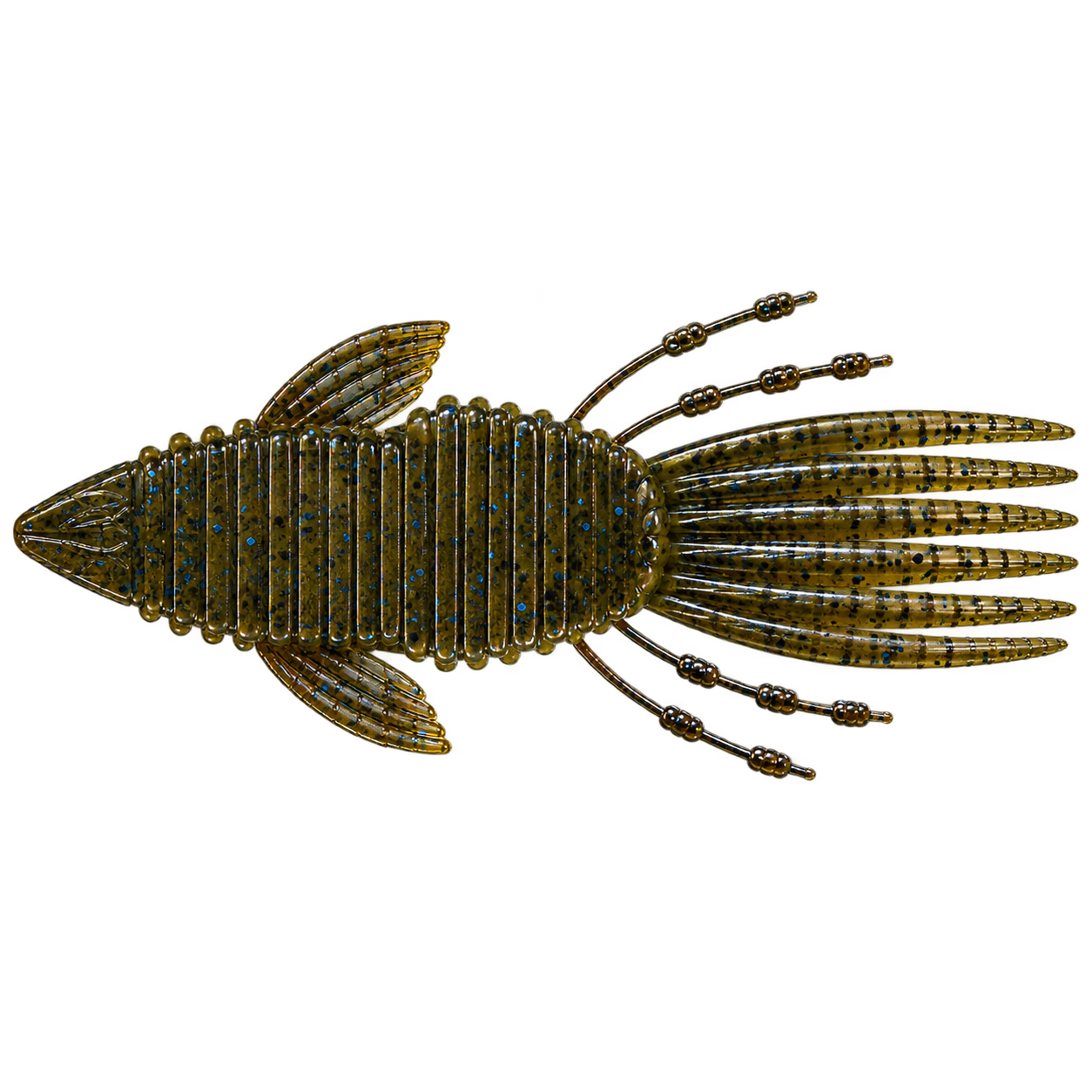
technique guide
How to Fish a Weedless Creature Bait in Lily Pads
A practical system for reading pad fields, rigging a creature bait cleanly, crossing vegetation, and controlling the fall through high-percentage openings.
Published · Updated · 9 min read
Quick answer
THE FIELD PLAN.
- Target edges, points, holes, lanes, isolated pads, and places where vegetation meets wood or deeper water.
- Rig the bait straight and protect the hook point without sacrificing the working hook gap.
- Cross the cover under control, then pause and let the bait fall beside stems or through openings.
- Use tackle strong enough to move a fish before it wraps multiple pad stems.
Why weedless creature baits work in lily pads
Lily pads give bass shade, overhead cover, ambush lanes, and access to bluegill, insects, frogs, and other forage. A weedless creature bait can travel across the same cover, then change direction and fall when it reaches a hole or edge. That surface-to-fall transition is one of the presentation’s biggest advantages.
The best bait is not simply the one that avoids every stem. It must cross vegetation without constantly fouling, remain balanced when it reaches open water, and leave enough hook gap to connect when a fish bites. Rigging and lure control matter as much as the shape itself.
Find the highest-percentage pad targets
Do not treat a large pad field as one uniform target. Start with outside points, inside turns, isolated clumps, open pockets, boat lanes, and places where pads meet grass, wood, rock, or a depth change. Those irregularities reduce the amount of water a bass can use and make each cast more intentional.
Fish the outside edge before moving deeper. Cast parallel to the edge, across small points, and beyond isolated pads. If those targets are quiet, move to holes, seams, and lanes. Sun, wind, current, and water clarity can change which side of the cover is most productive during the day.
Rig the creature bait straight and weedless
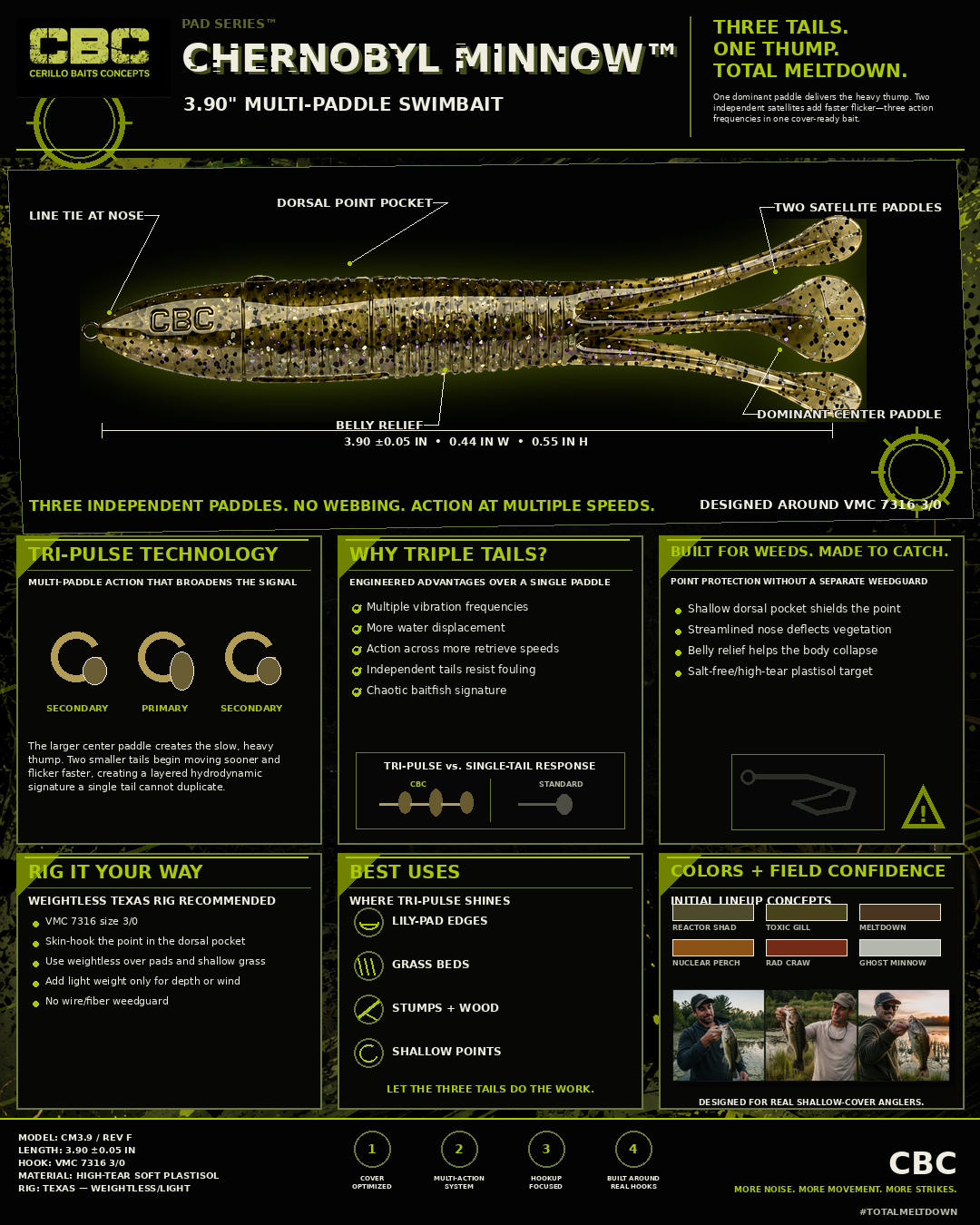
Choose a hook that leaves usable gap after the bait collapses. Thread the nose on center, rotate the bait around the offset, and mark the natural re-entry point while the body is relaxed. A creature bait that is stretched, compressed, or crooked will roll, collect more vegetation, and tear faster.
Lightly skin-hook the point or place it in the lure’s intended protection feature. Then press the body down by hand and confirm that the plastic can clear the point and bend. Weedless should mean protected in cover—not buried so deeply that the hook cannot work.
Choose rod, reel, line, and weight for the cover
A baitcasting setup with a medium-heavy or heavy, fast-action rod is a practical starting point. Choose enough length and power to pick up line and move a fish, while keeping enough tip control to place the bait accurately. A higher-speed reel can help gather slack quickly after the lure falls into an opening.
Braided line is common in dense vegetation because it cuts through stems and provides direct contact. Many anglers start between 40- and 65-pound braid, adjusting for cover density, lure weight, and equipment. In sparse pads or clear water, a heavy fluorocarbon setup may be useful, but abrasion and stretch should be monitored. Check the knot and the final few feet of line often.
Ride the cover, then work the opening
Cast beyond the target when possible and bring the bait onto the pad field without landing directly on the best opening. Use the rod tip to guide it across leaves and stems with steady, controlled movement. Pause at edges so the appendages can settle before the bait leaves the cover.
When the bait reaches a hole, lane, or outside edge, lower the rod and let it fall on controlled slack. Watch the line for a tick, jump, sideways movement, or unexpected slack. If the opening has depth, lift the bait back toward the underside of the pads and let it fall again before making the next cast.
Detect the bite and set the hook
Pad bites are not always violent. A fish may pull the line sideways, swim toward the boat, or simply stop the fall. Reel down quickly while keeping contact, confirm that the fish has the bait, and drive the hook with the rod and line you selected for the cover.
After the hookset, keep the fish moving. Giving a bass time to turn and wrap several stems can turn a clean bite into a lost fish. Maintain pressure, use the rod’s power, and be prepared to move the boat closer if the fish becomes pinned in vegetation.
Common lily-pad mistakes
Avoid landing directly on every opening, moving the bait at one unchanging speed, or dragging it past a high-percentage edge without a pause. Do not bury the hook point so deeply that the bait cannot collapse, and do not add more weight than the presentation requires. Excess weight can punch through cover when you intended the bait to ride over it.
Another mistake is fishing only the thickest cover. Productive bass often position on the first edge, an isolated clump, or a transition that offers easier feeding access. Start with the efficient targets, learn where the bites are coming from, and then decide how deep into the pad field you need to go.
A simple pad-field sequence
Begin with parallel casts along the outside edge. Next, cross points and isolated pads. Then target holes, lanes, and transitions before probing the thick interior. On each cast, move the bait across cover, pause at an edge, control the fall, and give the best opening more than one movement when conditions call for it.
Change one variable at a time. Adjust target type, fall speed, pause length, or color separately so the next bite teaches you something. A repeatable process is more valuable than racing through a pad field with random casts.