rigging guide
How to Rig a Weedless Creature Bait for Heavy Cover
Build a clean Texas-rig profile, protect the hook point, and preserve enough hook gap for lily pads, grass, laydowns, and shallow cover.
Published · Updated
Choose the hook by fit, not habit
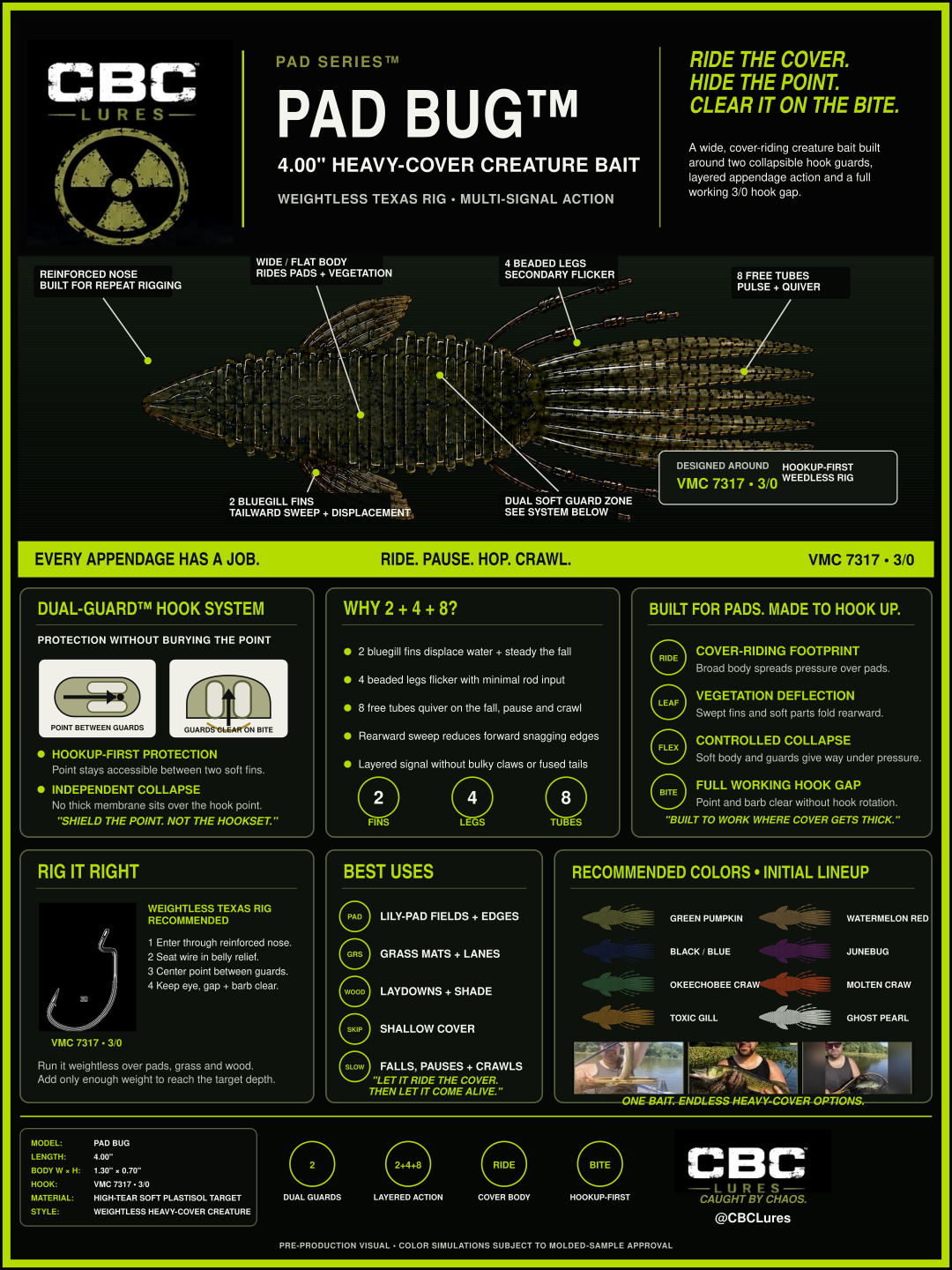
The hook must be large enough to leave usable gap after the soft bait collapses, but not so large that it stiffens the body or places the point beyond the intended protection. Lay the hook beside the lure before rigging and note where the bend naturally reaches the body.
Extra-wide-gap hooks often fit broad creature baits, while narrower profiles may work with a standard offset shape. Manufacturer sizes are not perfectly identical, so compare the actual hook to the actual bait rather than relying only on the number printed on the package.
Thread the nose straight
Insert the point through the center of the nose, exit after a short section, and slide the bait around the offset. Rotate it so the body hangs straight before deciding where the point should re-enter. A crooked nose makes the lure roll, catches more vegetation, and tears sooner.
Mark the natural entry point by holding the hook against the relaxed body. Do not stretch or compress the bait to reach the hook point. The lure should remain straight when the point is seated.
Protect the point without burying the gap
For open water, an exposed point may provide the fastest contact. Around cover, lightly skin-hook the point or place it in the lure’s intended protection feature. The goal is to keep vegetation from catching the point while allowing the body to move out of the way during a strike.
After rigging, press the body down by hand and confirm that the hook gap opens freely. If the plastic cannot clear the point or bend, change the hook fit or point placement before fishing.
Add weight only when the presentation needs it
A weightless rig can glide, settle slowly, and cross shallow cover with less disturbance. Add a bullet weight when you need to penetrate a mat, maintain bottom contact, work deeper water, or control the bait in wind. Use the lightest weight that accomplishes the job.
Pegging keeps the weight and bait together through thick cover; leaving the weight free can create a different fall and more separation. Neither is automatically better. Match the choice to the cover and the path you want the lure to take.